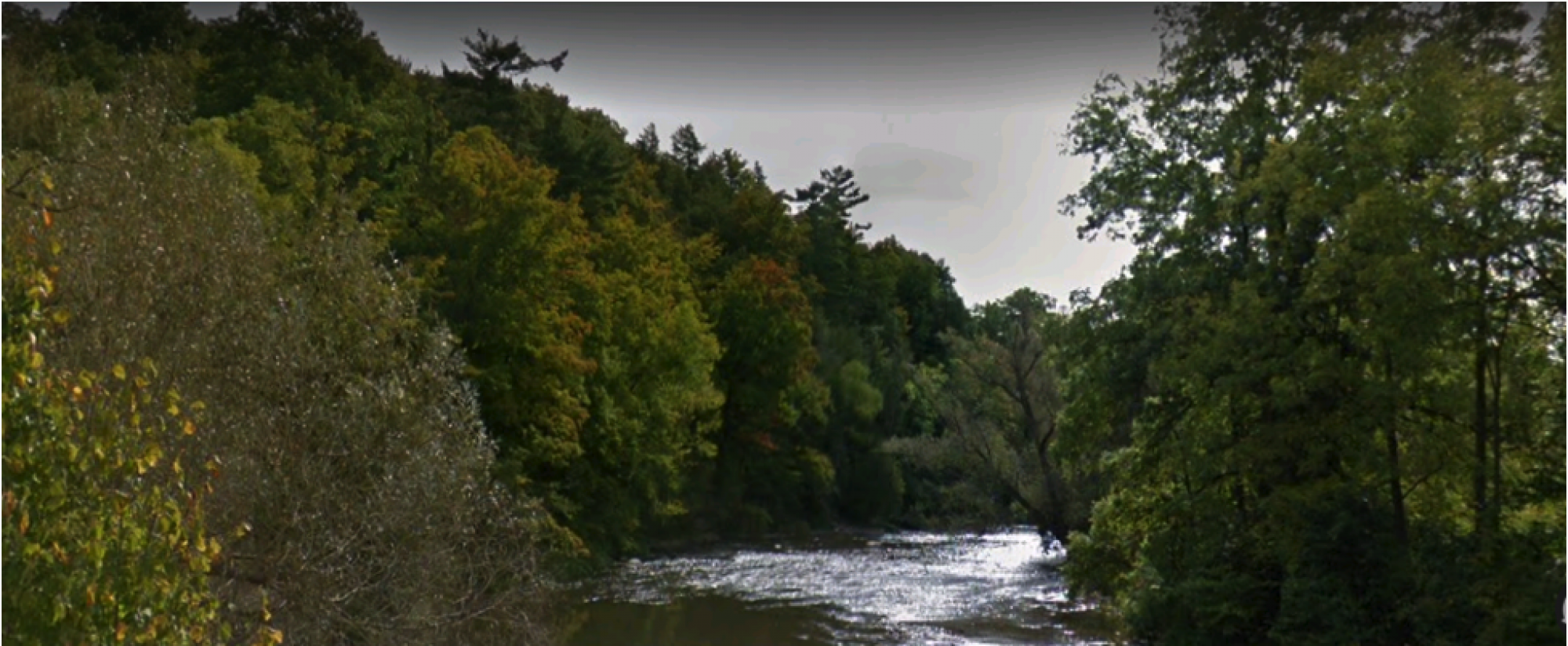
When the season was winding down last year, I knew that I’d have to find something to keep me going for the seven month wait for the next season to begin. The decision wasn’t hard though, because there is a natural extension to the practice of fly fishing: Fly tying.
With that in mind, I turned my efforts into learning the art of tying flies. I had no illusions about the scope of this, as everything associated with fly fishing is a life long trip.
First, the equipment. You can make this a short list, just a vice to hold the hook, a bobbing to hold the thread, and a lot of practice of hand techniques needed to secure and finish the tying process. In fact, for the first few weeks, after I had learned the tying techniques I found it easier to finish the fly by hand than with the assistance of a dedicated tool. Once you get used to the tools though, they do speed up the process and make your life a little easier, and there are a multitude of said tools.
Then there are the materials needed, which range from practically every type of feather, hide or fur to synthetic materials and even replica kits to imitate various shells and bug casings. In the hands of a professional, these items are turned into incredibly lifelike flies, and some of them are true works of art. I, however, started off with very basic materials so that I could learn progressively, and it wasn’t long before I found myself visiting local outfitters’ shops to pick up more diverse materials as I progressed.
When I began, the results were woeful, although I didn’t think so at the time. In fact I was quite pleased at first with what I’d done. It was only when I began to develop a better technique and my skill level rose that I saw the preliminary products for what they were, practice attempts. They did serve a valuable purpose though, as it was when tying them that I honed my skill level and progressed to more difficult techniques with much better results.
I don’t have a picture of the early efforts, as I stripped them so that I could use the hooks and improve the quality of the tie, but here is a selection of some of the flies I’ve produced in the three months since I started. One note: These flies appear much larger in the pictures than in real life. The largest fly shown here is the Blue Damselfly, which measures less than 3/4 inch in length.
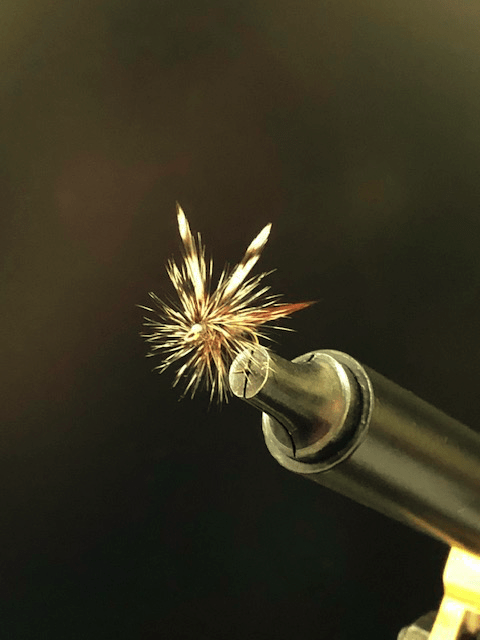
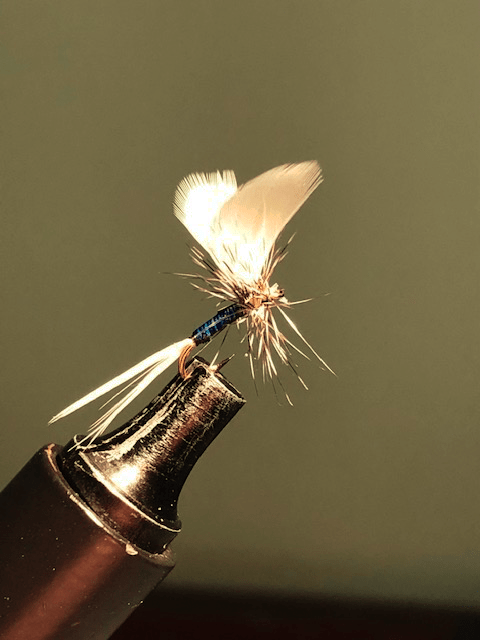
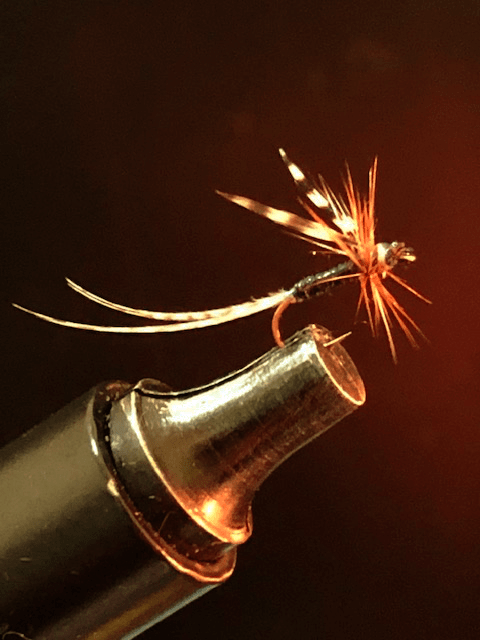
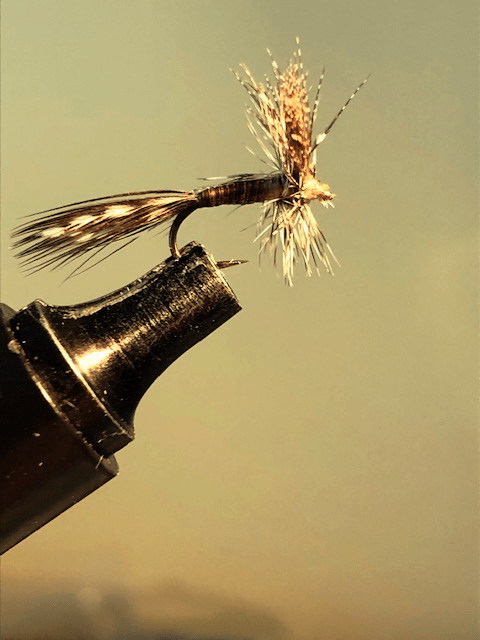
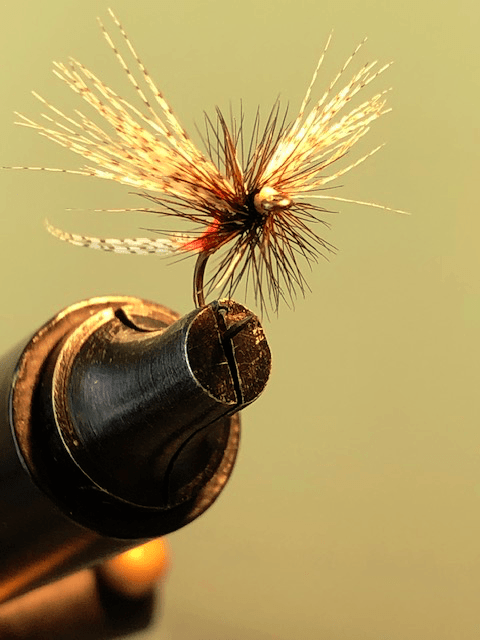
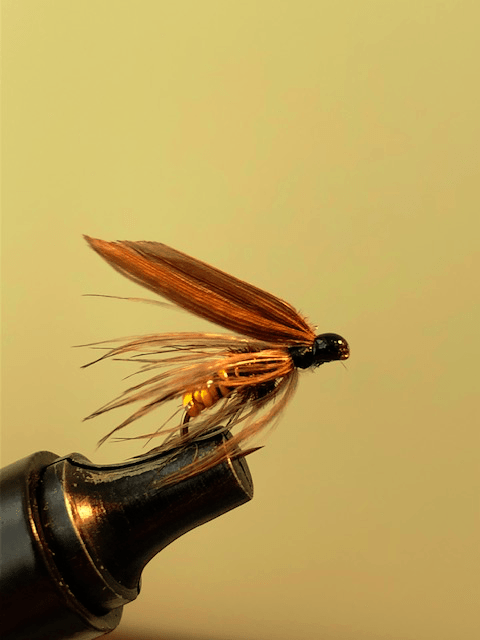
When I first started three months ago, I spent 2 1/2 hours trying to complete a basic fly pattern and still could not master the finishing technique to complete it. Now I can complete that same patten in 10 minutes. The patterns I have posted here took from ten minutes (Adams Catskill, Hedrickson Red Catskill) to about 20 minutes (Bridgeton Blue Quill, Blue Damselfly).
As much as I like tying these patterns, most of the time I’ve been tying patterns that will prepare me for the upcoming season, dozens of simple fly patterns that mimic all of the various hatching species on the rivers that I fish. To date, I’ve tied about 80 in total, and I have three months left to bolster those numbers, as I have to build up a quantity of these patterns so that I have enough to get me through the summer. Last year I had great success (more than 75 fish) and only lost about a dozen flies, but now that I can replace any losses I expect that number to rise, as I’ll definitely be more aggressive in approaching those sunken logs and fallen trees in the hunt for that trophy that lurks therein 🙂
Here’s something to whet my anticipation of those opportunities.
 Come Fly With Me