When I decided to take up fly fishing as a hobby I was aware that it was a sport that requires good technique and consequently I was prepared to put in a lot of effort without much return. I had no illusions about the learning curve, and had set my expectations realistically, even thinking it may take quite a while to see any evidence of improvement. Read: I may not catch many fish for a while.
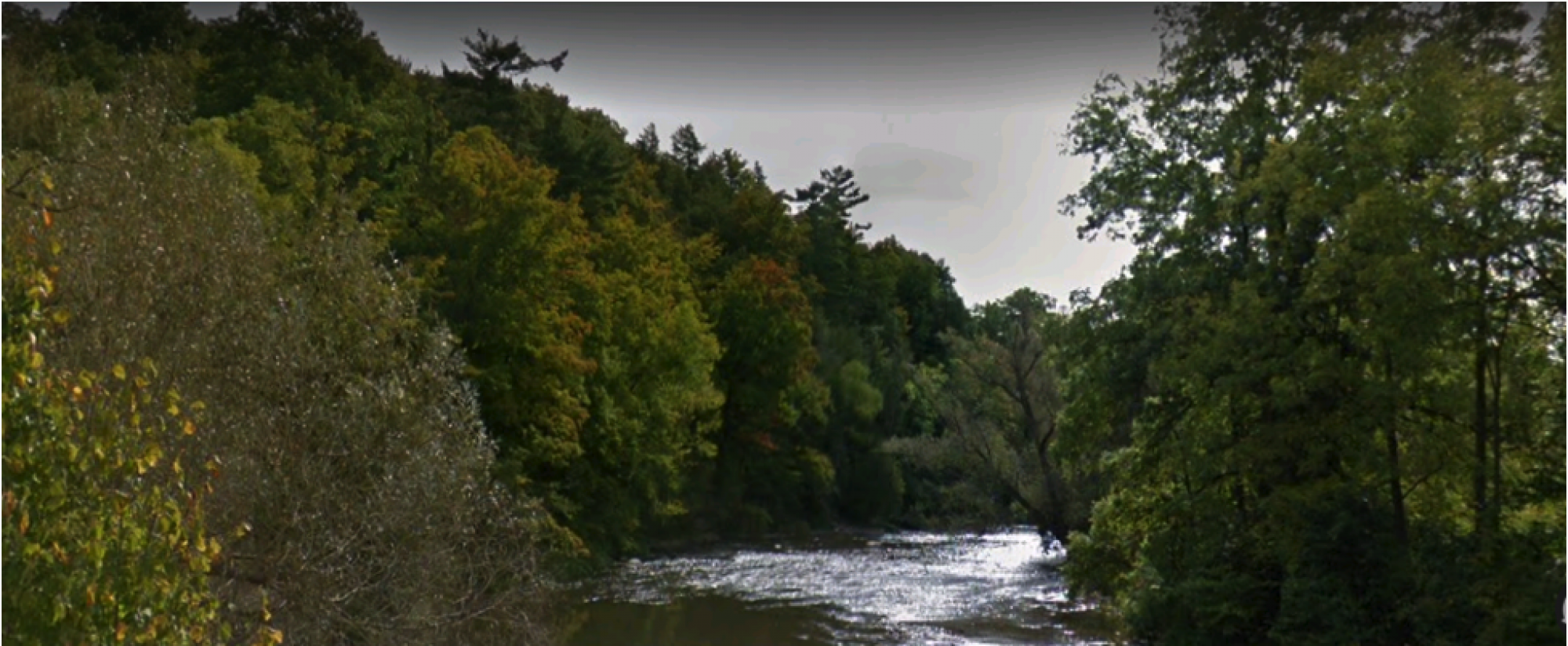
For the previous outings I was fishing in locations that, while known to harbour some brook and brown trout, were not very prolific. The odds of me catching much were slim, but that was fine because my main goal was to practice and improve. Still, sooner or later I was going to have to put my practice to the test, and the true proof that I was getting better would only come in the form of a wild trout at the end of my line. With this in mind, I took time this week to go to locations that were known to be some of the best trout fishing rivers in North America, the Saugeen and Credit Rivers.
Both of these rivers are serious waters. The Saugeen is one of the largest trout rivers in Ontario, with many large tributaries, and is both wide and deep for much of its run. The Credit is also a large river with strong tributaries, and demands a lot of technical expertise. If I wanted to prove myself, I couldn’t ask for any harder tests.
First up was the Saugeen. I had a good two hour drive to the river, but this gave me the opportunity to enjoy one of the side benefits of this sport, driving through the Ontario countryside, listening to music. Below is a selection from the trip.
Upon arriving at the Saugeen, I took a moment to scout the area and plan how I was going to approach the river. The water was still very high, so once again I knew that this might just end up being a nice walk in the country, albeit one that takes place in a river. I hit the river near a small town named Durham, and began a methodical approach, working my way upstream. It soon proved to be a real challenge to keep an eye on the fly, due to the fast, high water and I lamented not bringing my sunglasses to cut the glare off the water’s surface. This proved costly, as I had a couple of strikes but did not notice them until the fish had spat out the fly.
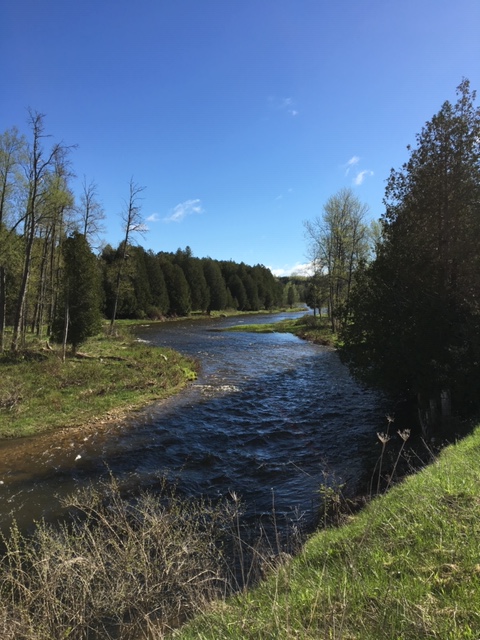
I fished the area for three hours, but the two missed strikes were all I had to show for it. After a brief lunch, I drove to the other planned stops but the water levels were even higher in all of them, as I had planned to move downstream throughout the day, and the afternoon locations were swollen by the runoff of even more tributaries.
Despite the restrictive conditions, it was a great trip, so it was without regret that I started back for home. With the late afternoon sun and the wonderfully warm temperature, I opened the roof and cranked up the tunes, among which were these two from David Sanborn.
Two days later it was time to attempt the Credit, but I wasn’t going to repeat the previous outing. This time, I went to one of the headwater tributaries, the West Credit, where according to the reports, the water levels were closer to normal.
Upon arrival at the location, I could see this was going to be a much different experience. The water levels were good, and I could see several pools throughout the approach. Some of the water was almost languid in spots, and the banks were overhung with dense brush and tree cover. The casts in this location would have to be made with extreme precision.
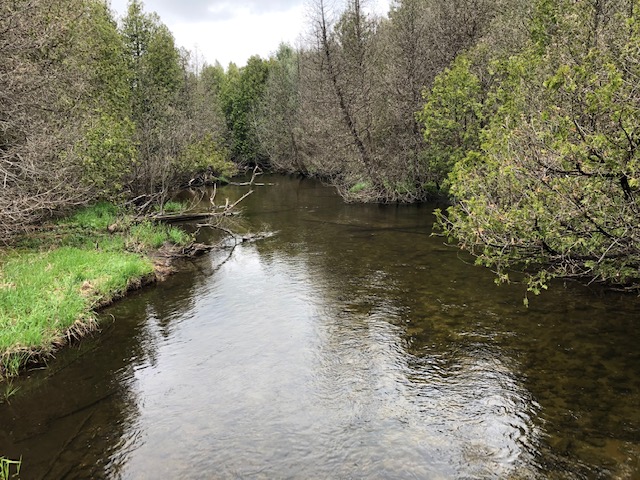
My approach this time was to work downstream, and try to work the various overhangs and pools along the way. Even though the outlook called for overcast skies and rain, I left nothing to chance and took my sunglasses 🙂
When I entered the water, I saw countless sunken trees and and realized this was going to be even harder and require much more precision than I thought. I fully expected to lose all my flies within the first hour of fishing, but if I walked away from this, I may as well take up another hobby.
Sure enough, within five minutes I lost my first fly on a careless backcast. Still undaunted, I repaired my line by tying on additional tippet, tied on another fly, and once again turned to take on the river. Five minutes later I landed the first fish I have ever caught on a fly rod, a 9 inch brook trout! I gently removed the hook, and lowered it into the river until it recovered and swam away at light speed.
A 9 inch brook trout is not a big fish, but the average size for this area is between 6 and 10 inches, and many anglers keep any fish within this range. However, I had decided that unless my first fish was a trophy (fat chance) I was going to let it go, so I did and was thrilled just to finally be on the scoreboard.
Over the next two and a half hours I moved downstream hitting the pools and riffles and I caught another 10 brookies, most of them between 7 and 8 inches long. All of these were set free as well, as I found that the biggest thrill is to actually look at these beautiful little fish sitting in your hand for a brief moment, and then see them dart away.
I packed up and moved to a different section of the river and caught another one, this time a little smaller. I have come to the conclusion that these little fish are just freaking greedy! By the early afternoon I had caught a total of 15 fish, 10 of which were of an acceptable size to keep, but I had let them all go without an ounce of regret. I’ve been told that brook trout are very easily spooked and you have to be precise in your presentation, otherwise you’ll scare them away. After today’s display I’m not sure that’s the case, but this was a much needed boost to my confidence and if I needed evidence that I’m on the right track then I think I have it 🙂
I packed up my gear and poured the last of the coffee from my thermos, and headed home to the melancholy sounds of Tom Waits. A truly glorious day.
 Come Fly With Me