It has taken some time, but I’ve finally managed to get time to go out and fish, and there’s a lot to catch up on.
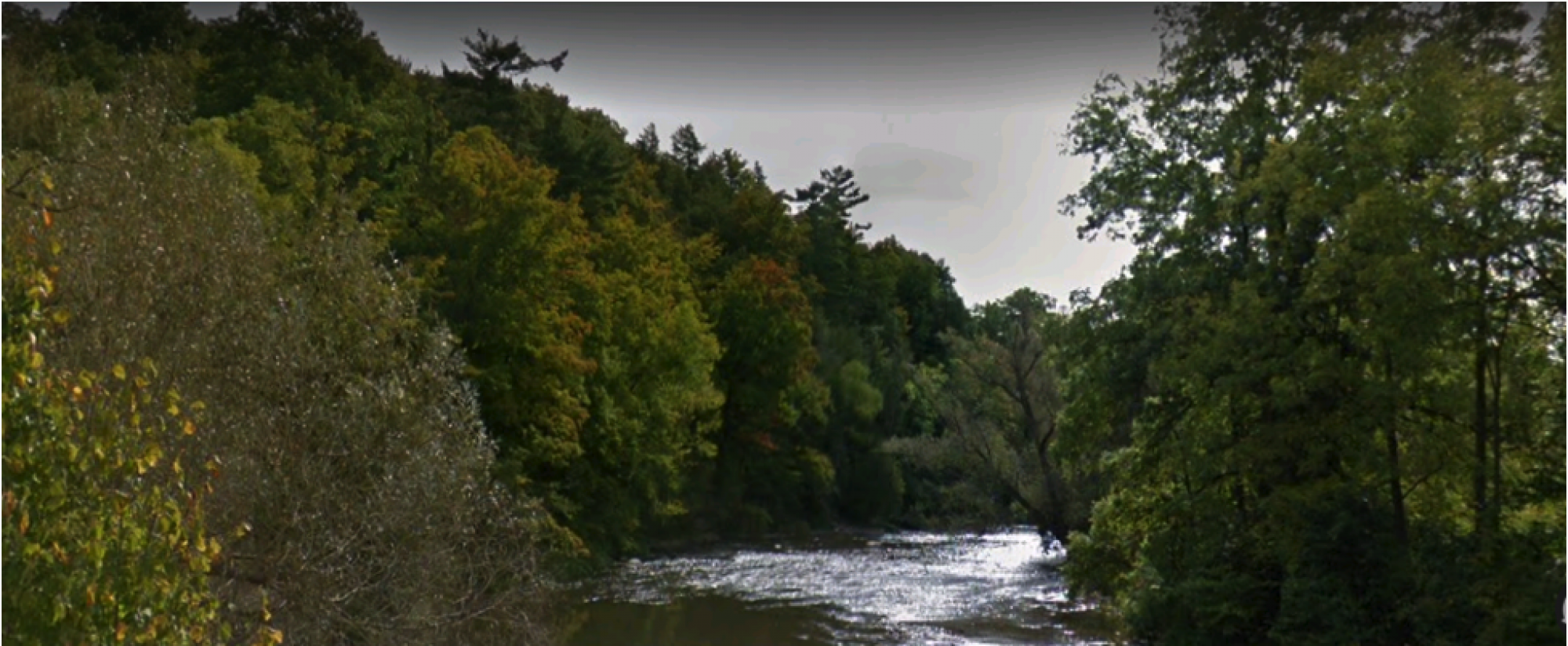
Last week I had a few hours one afternoon, so I thought it would be a great chance to go out for my first time and I grabbed it. I went to a little spot on Bronte Creek that I had scouted over the last few weeks, just about ten minutes from home.
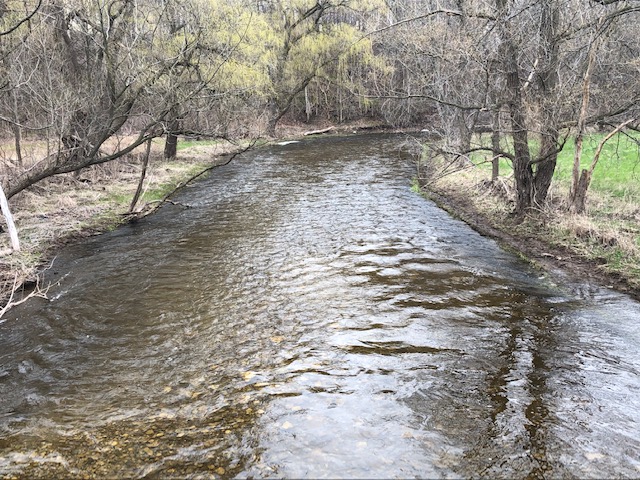
When I got there it was pretty clear from the start that I wasn’t going to have much success catching anything. First, this would be my first time ever fly fishing; I hadn’t even practiced casting! Secondly, while I was fixing my gear, two people were leaving, and they told me that they hadn’t even seen a fish in the two hours they’d been there. Given that they’d been trampling all over the area unsuccessfully for a couple of hours (and spooking anything that might have been there) I didn’t harbour any illusions about my chances. Instead I looked at this as a good chance to practice under game conditions.
After a quick survey of the stream I picked a nice spot to start (bend of the stream, under the last large tree on the left) and waded out into the water. It took a couple of attempts to get started but pretty soon I was casting out to the location I wanted, albeit the casts were very ungainly. After about ten minutes though, the presentation was notably improved. Still not good enough, but much better.
I decided to move to another spot on the stream because where I was standing was a tough location, standing thigh deep in very swift rushing water, and I found I was concentrating more on maintaining my footing than my casting technique.
I was also getting really warm. My waders are made of neoprene, and are essentially a chest high wet suit (wearing a wet suit to stay dry, lol) and they provide supreme insulation against the cold water of the stream, so I took this opportunity to rethink my get up and drop off some things I really didn’t need. Boring details maybe, but this entire episode was shaping up to be a great learning opportunity.
Quickly relocating, I started playing different parts of the stream, and I found my casting starting to improve to the point where I was making some good presentations. I even managed to pull of some decent 45 foot casts.
Then I succumbed to my usual Scottish attitude: I know everything, I can do everything, and I’ll do it my way. Immediate disaster! I rushed through the motions trying to drop a long cast and witnessed a ball of fishing line whizzing past me at something just a little less than light speed, landing about ten feet in front of my feet 🙂
Pulling it in I was confronted by a tangle of epic proportions. I made a quick nod to my Dad, as this brought back so many memories of the past, (him casting in a line and then coming over to untangle mine) and took a look at just what happened. In simple terms, my fly had somehow managed to weave itself in and around the line in the most intricate and elaborate pattern. This wasn’t any old tangle, this was the work of a master weaver.
At this point let me remind you of the scale of material we’re looking at. A fly line consists of the weighted line (yellow or orange, easily visible and easy to handle), a leader (clear monofilament, tapered to a very fine diameter) and the tippet (extremely fine monofilament, hardly perceptible to the naked eye). What I was looking at was the tippet and leader intertwined, and trying to discern which was which was almost impossible.
Still, as previously stated, this was all a learning moment, so I got stuck in and about 10 minutes later I had managed to free everything and was ready to continue. However, the tangle kinked the line, and although I was making pretty good casts again, the path of the line was noticeably affected and it was not as easy to control the landing or presentation of the fly. After about half an hour, I managed to catch a submerged tree that was the focus of my casting, and reluctantly sacrificed my first fly.
Packing up my gear, I made a quick review of my day and came up with a few key lessons to remember for future excursions. 1. Water moves fast; make sure you have good footing, and only wade into areas as needed. Most areas can be reached with a controlled cast. 2. Fly line is delicate for a reason, it is designed to present a fly to the fish as naturally as possible. If you get tangled and the line is kinked, then replace it. 3. Be patient, and don’t rush. Take time to cast in a controlled fashion and let the rod do the work.
I also realized that this was harder than I expected, because I made it more difficult than it was. This Pretzel Logic may seem as tangled as my line, but what I’m saying is this: Casting a fly line is a matter of timing and technique that is quite easy to learn, and the fly rod does all the work for you. Most people, myself included, try to power the line forward, but that is counterproductive. The technique takes practice, but progress is quick if you keep to the basics.
I didn’t catch any fish, but all things considered, this was a success. I spent approximately 3 hours in the afternoon standing in a fast stream and had a great time, all the while learning about how to do things better. The best way to sum this up is to say “I’m hooked”.
 Come Fly With Me